
The Kind of Courage We Don’t Talk About: A New Zealand Canyoning Experience
When I signed up for this New Zealand trip and I saw we were canyoning, I told myself not to overthink it.
I had even tried to prepare. Before the trip, I enrolled in water confidence classes, thinking they might help me feel more comfortable in deep water. What I discovered instead was that confidence in water takes time. A lot more time than I had before this trip. Still, I assumed it would be fine.
The night before the canyoning adventure, sleep never came. I lay awake the entire night. Strangely, I hadn’t felt particularly nervous when I went to bed. But by morning, the exhaustion was already sitting heavily in my body.
When the briefing started, I could feel the nerves begin to build. Wetsuit on. This will be okay, I told myself. Life jacket on. Brilliant… except suddenly breathing felt harder. Not ideal when you’re about to enter an experience that will require staying calm in moments that might feel overwhelming.
The first parts were manageable. Zip lining was fine. I wasn’t worried about that. Even the abseiling felt okay at the start. But halfway down, I lost my footing for a moment. It wasn’t dramatic, but it was enough for my body to register that this environment was outside of my normal.
When we reached the water, the emotions really began to rise. I could feel tears sitting at the back of my eyes. That was the last thing I wanted and the thought of crying in front of a group of people felt deeply uncomfortable.
Walking through sections of the canyon was manageable. The first water feature involved lying on your back and sliding backwards a short distance through a narrow channel of water. Simple enough, or so I thought. The water rushed over my face, straight into my nose, and I began choking. It only took a moment, but it was enough to drop my confidence even lower.
People around me were enjoying the adventure, pausing for photos. Later I would see some beautiful shots of the experience and the group moving through it together. At the time, though, I noticed almost none of it. I didn’t notice anyone taking photos. My focus had narrowed to one thing: putting one foot in front of the other.
At one point we moved through some rapids, and I found a rock to sit on. I looked down at my hands and noticed they were trembling. The tears were still there, hovering just behind my eyes. Ahead of us was the waterfall. Eight metres high, dropping into deep water. One by one, people stepped up and jumped. Some hesitated briefly, but they jumped.
I didn’t and the disappointment arrived immediately. The tears I had been holding back finally broke through.
I had hoped that I might manage at least one jump that day. I had struggled to do it even in the controlled environment of the pool during my water confidence classes. Expecting myself to do it here, surrounded by rocks and deep water, was unrealistic. But in that moment, logic didn’t help.
What filled the space instead was self-criticism. Harsh, unforgiving, and relentless.
I was painfully aware that others were also scared or not confident, yet they seemed to be managing it. Being the one who struggled the most felt incredibly exposing. It tapped into a familiar form of social anxiety - the fear of standing out for the wrong reasons.
Embarrassment sat alongside fear and exhaustion.
At one point I stood on a small ledge preparing to move through another rocky section. My friend noticed as I had tried to subtly wipe tears. “I’ve got you,” she said.
Then she added something else that mattered just as much. “You can always flick my hand away if you don’t want it.”
There was no pressure. Just support, offered freely. We came up with a simple plan. She would move ahead of me and another friend, would stay behind me. I would be sandwiched between two confident swimmers.
I told her and told her how grateful I was that she was there. It didn’t feel like an exaggeration to say I could not have done this without her. As the words of gratitude came out, the tears followed.
Behind me, another friend, called out asking if I was okay. I answered “Yep!” with as much confidence as I could muster while avoiding eye contact, knowing full well I would start crying again if I looked at him, and I didn’t need anyone else seeing me so overwhelmed.
Moving through the water wasn’t graceful. There was plenty of clinging, splashing, and awkward scrambling over rocks. But there was also laughter and banter, which softened the sharp edges of the fear. My friend repeated those words often as we continued, “I’ve got you.”
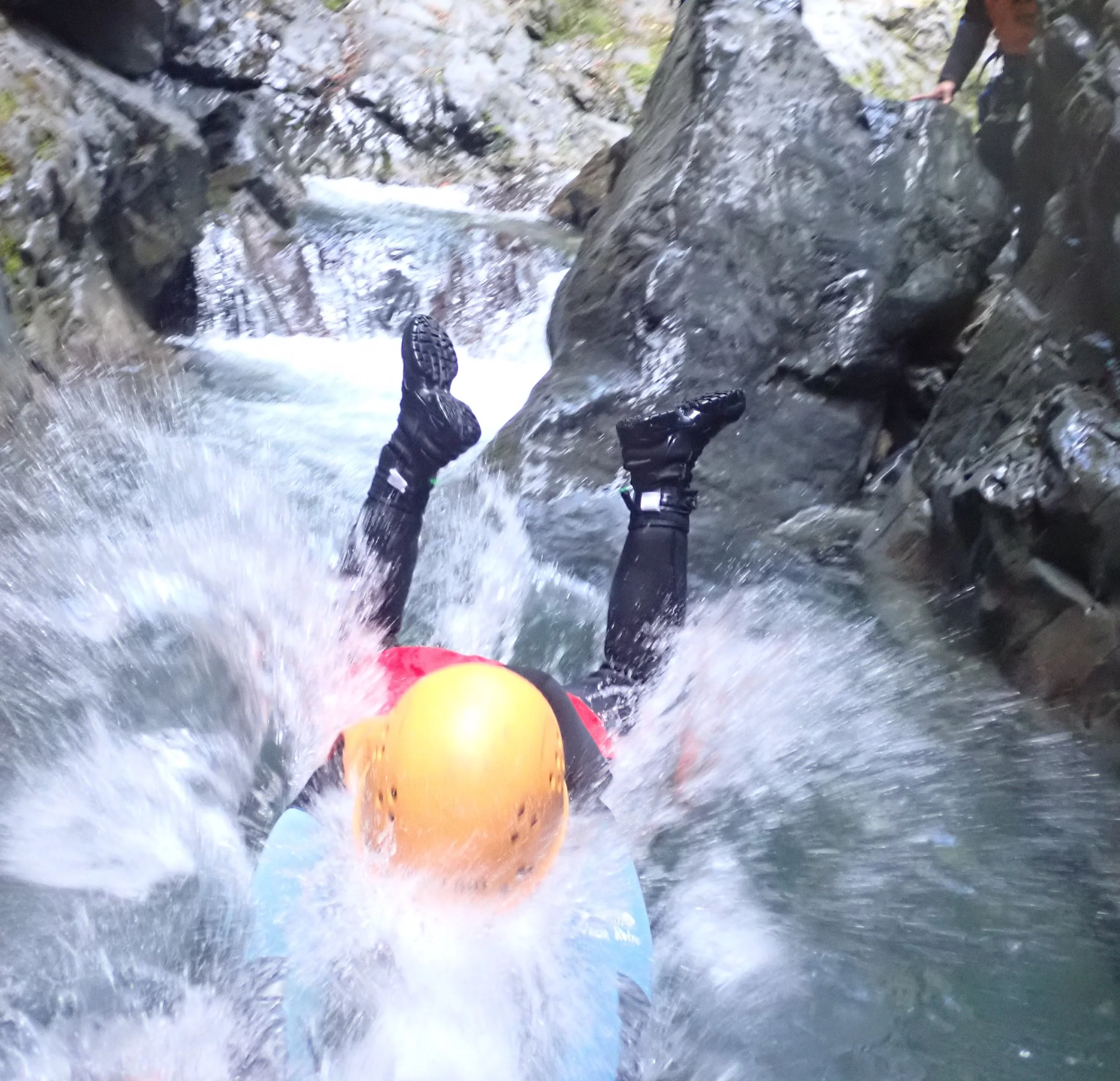
The final feature was a simple belly-flop jump into the water. For most people, it looked effortless, and they could do some cool poses as they launched themselves off the rock. For me, it was anything but effortless. But this time I stepped forward. My friend was already in the water, and I knew her hand would be there, waiting.
I jumped. It wasn’t graceful. It wasn’t brave in the cinematic way adventure stories often describe. There was no cool pose. But I did it. I latch onto to both my friends, and as a trio, we glided out together, me sandwiched in between them.
Looking back, I wish I could say I immediately felt proud. The truth is more complicated. Part of me still felt disappointed. I had imagined myself handling the experience differently. I had hoped to feel more capable, more confident, less overwhelmed.
Later, my friend said something that stayed with me. He told me he was proud and that I had been pushing through barriers. I could hear the words, but I didn’t quite let them land. The self-critical part of me was quick to minimise what had happened. To focus on what I hadn’t done rather than what I had. To dismiss the effort it had taken to stay, to keep going, to accept help.
But another part of me recognises something important. For me, this experience was a reminder that courage doesn’t always look like conquering fear.
Sometimes courage looks like staying.
Sometimes it looks like asking for help.
Sometimes it looks like allowing someone else to hold your hand while you take the next step.
As a psychologist, I’m often interested in how self-criticism can appear in moments where we feel vulnerable or exposed. Experiences like this remind me that understanding these patterns intellectually doesn’t mean we’re immune to them when we’re under pressure.
What mattered most that day wasn’t that I jumped the waterfall or moved through the canyon perfectly. What mattered was that I showed up. I stayed and when I needed support, I accepted it.
Looking back on my time in New Zealand, I realise that this canyoning experience captured something important about the trip as a whole. Travel often invites us into unfamiliar spaces where we don’t feel entirely in control. In those moments, courage rarely looks dramatic. More often it appears quietly, in small decisions to keep going, to ask for help, or to trust the people around us.
As I reflect on the experience now, I can see how courage and connection often sit side by side. Sometimes the bravest step we take is allowing ourselves to be supported as we move through something difficult.
This reflection shares a personal experience and general observations about human behaviour. It is not intended as psychological advice.
